
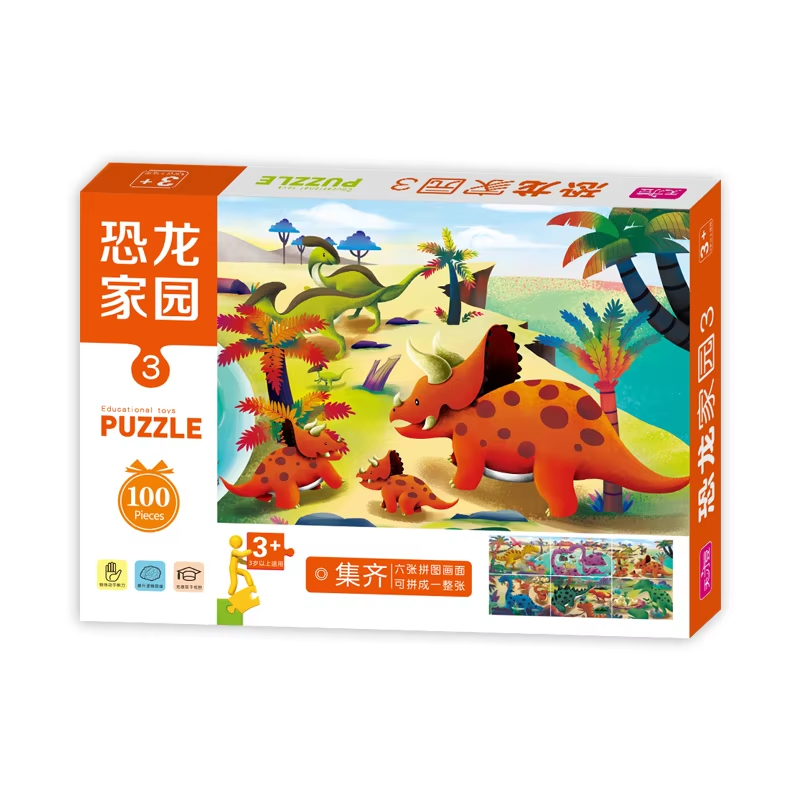
Boosting Visual-Spatial Skills with 3D Card Learning
How 3D Shape Puzzles Enhance Visual-Spatial Reasoning and Early Geometry Understanding
The ability to think spatially really matters when it comes to doing well in math from an early age and later on in STEM fields. Recent research from 2023 looked at kids between four and six years old who spent only fifteen minutes each day working with those three dimensional card puzzles. The results were pretty impressive actually these kids improved their spatial rotation skills by about 23% compared to other kids who used regular two dimensional materials according to Resnick and colleagues last year. When putting together those interlocking cards to make shapes like cubes or pyramids, young minds start getting familiar with basic geometry concepts without even realizing it symmetry, how things line up, and what makes something balanced. All this fiddling around with physical objects helps develop parts of the brain responsible for solving problems and managing complex tasks, which explains why so many educators are now making space for these kinds of activities in classrooms.
The Connection Between Spatial Learning and Cognitive Development in Young Children
When kids play with three dimensional objects, it actually lights up important parts of their brains responsible for remembering things and understanding space, such as the hippocampus area and the parietal lobe region. A study published last year looked at how toddlers interacted with different materials and found something interesting. Preschool aged children who worked with physical 3D cards showed about 18 percent more connection between the left and right sides of their brains when doing thinking exercises compared to kids playing on tablets or computers. What does this mean? Well, when these brain areas work together better, it helps build essential skills we need for recognizing patterns and following steps logically. These are basically building blocks for learning math concepts and developing scientific reasoning abilities later on in life.
Case Study: Improving Preschool Math Readiness Through Hands-On 3D Card Activities
A 12-week study involving 120 preschoolers measured gains in foundational math skills after regular use of 3D card activities:
| Skill | Improvement vs. Control Group |
|---|---|
| Shape Identification | +32% |
| Volume Estimation | +28% |
| Spatial Vocabulary | +41% |
Teachers observed that these skills transferred to new contexts, such as block-building challenges and basic map interpretation, indicating improved adaptability in problem-solving situations.
Why 3D Modeling Improves Conceptual Visualization Better Than 2D Tools for Kids
Static worksheets and digital screens just don't cut it when it comes to really getting how things work. Physical 3D cards give kids something tangible to touch and manipulate, which helps them understand concepts better. Kids who play around with these cards, maybe spinning a wobbly pyramid this way and that, start to get a real feel for what makes structures stable and how different parts relate in space. A recent study from the early childhood education field back in 2024 showed pretty impressive results too. The kids working with those 3D tools could predict what cross sections would look like inside complex shapes about 3 times more often than others. And being able to visualize these internal structures is actually considered a sign of pretty advanced spatial thinking skills.
Engaging Young Learners Through AR-Enhanced 3D Cards
Using Colorful, Dynamic AR Designs to Capture Children’s Attention and Sustain Engagement
3D cards enhanced with augmented reality bring together bright animations and interactive overlays for really engaging learning experiences. According to research from the University of Melbourne back in 2022, kids tend to focus about 42 percent longer when working with these AR features compared to regular old two dimensional stuff. When virtual animal models or shapes react to what happens around them in the real world, students get their hands on the material in ways that make sense for different types of learners. Their brains connect what they see with actual movement, which helps information stick better over time.
Interactive Learning with AR Cards: Turning Play into Meaningful Educational Experiences
When kids get hands on with physical objects while also engaging with digital stories, augmented reality turns playtime into actual learning moments. Imagine finishing a 3D puzzle that then brings up an animation explaining how ecosystems work or showing number patterns in action. This kind of interaction really helps build those thinking skills step by step. Teachers have seen something interesting happen too. A recent study found that classrooms using these AR tools saw about 40 percent more students actively participating during lessons on basic math stuff like counting and sorting. The numbers speak for themselves, but what's even better is watching kids light up when they make connections between what they touch and what appears right before their eyes.
Growing Trend: Adoption of 3D Augmented Reality in Classrooms and Home-Based Early Learning
Over half of preschools in the US have started using augmented reality in their classes lately, according to recent data. The 3D cards seem to be what most schools go for since they're easy to carry around and work well with how teachers already run their lessons. A lot of parents really like this mix of technology too. Kids get to interact with screens but still have something physical to touch and manipulate, which helps them learn better when moving between school and home environments. Many families find that consistency makes all the difference in reinforcing what little ones pick up during class time.
Catering to Diverse Learning Styles with 3D Card Technology
3D card learning supports diverse learners by engaging sight, touch, and movement simultaneously. Unlike flat, one-dimensional materials, these tools offer multimodal pathways to understanding—making them especially effective for neurodiverse classrooms.
Supporting visual, kinesthetic, and tactile learners through multisensory 3D card experiences
People who learn visually get a better understanding when they can actually see how different parts relate in space. Those with a kinesthetic learning style tend to build their fine motor skills as they put things together and move them around. For tactile learners, running their hands over surfaces helps them understand concepts more deeply. Take geometry for example. When students spin around a real 3D model made of cards, they often pick up on spatial relationships much faster compared to just looking at flat diagrams drawn on paper. Most teachers have noticed this difference in classroom settings where hands-on materials are available.
Increasing motivation and participation in children with varied learning preferences
When instruction aligns with individual learning styles, children experience less frustration and greater confidence. A child who struggles with abstract symbols may thrive when solving math problems with tactile number cards. Teachers report that multisensory 3D tools boost overall classroom engagement by 40% compared to single-modality approaches.
Balancing Innovation and Developmentally Appropriate Practice in Early Ed Tech
Where 3D Card Fits in the Evolving Landscape of Technology Integration in Early Childhood Education
Three dimensional cards have become something pretty cool in early education technology these days. They mix real world touching and playing around with stuff plus some extra digital features if teachers want them. This fits right into what NAEYC says about kids needing active learning experiences where they get their hands dirty. Teachers can also throw in augmented reality when it makes sense for helping little minds grasp bigger concepts. A lot of classrooms actually use these 3D cards as starting points for lessons. Kids will construct something tangible first, maybe a model of a volcano or building, and then switch over to using tablets to see how things work behind the scenes. Like watching how air moves around objects or seeing gravity at play through animations. It helps connect what they physically create with those harder to understand abstract ideas without making the transition feel forced.
Managing Screen Time While Preserving Tactile, Hands-On Interaction With 3D Learning Tools
According to a recent study from 2023, around two thirds of preschools are keeping kids' screen time down to just fifteen minutes a day. This has led to increased interest in tech solutions that actually support hands-on learning instead of replacing it altogether. Take 3D card systems as one good example. These let children decide if they want to use the screen component or not. Imagine a kid building some sort of shape out of blocks, then scanning it with a device to see a short animation showing what those corners actually mean in geometry terms. The whole experience feels natural because the digital part only kicks in when it makes sense for the activity at hand, which is exactly what pediatricians recommend anyway.
Addressing the Paradox: High-Tech 3D Solutions for Young Learners With Short Attention Spans
Traditional 3D modeling software often overwhelms young minds, but simplified "snap-and-play" 3D cards are designed for developmental appropriateness. Features include:
- Micro-interactions: Completing a card pyramid unlocks a 10-second AR story about ancient civilizations
- Instant feedback: Mismatched edges produce gentle vibrations, guiding self-correction
- Modular complexity: Toddlers start with stacking basic shapes; kindergarteners progress to magnetic cards that form moving mechanisms
This scaffolded design sustains attention through short, rewarding challenges that match preschoolers 3–7 minute focus spans, turning cognitive limitations into opportunities for incremental mastery.
FAQ
What age group benefits the most from 3D card learning?
3D card learning is particularly beneficial for children aged 4 to 6, as it helps enhance spatial rotation skills and supports the foundation for STEM education.
How do 3D cards improve conceptual visualization?
3D cards provide a tactile experience that helps children understand spatial relationships and stability of structures, enhancing their ability to predict internal structures and develop advanced spatial thinking skills.
Why is augmented reality (AR) used with 3D cards?
AR enhances 3D cards by adding dynamic and interactive elements that sustain children's attention longer and provide meaningful educational experiences, turning play into learning opportunities.
Are 3D cards suitable for neurodiverse learners?
Yes, 3D cards engage multiple senses such as sight, touch, and movement, making them effective for neurodiverse learners as they cater to varying learning styles.
How do preschools manage screen time while using 3D learning tools?
Preschools manage screen time by integrating 3D card systems that support hands-on interaction. The digital components are optional and only used when beneficial for the activity, in line with recommended screen time practices.
Table of Contents
-
Boosting Visual-Spatial Skills with 3D Card Learning
- How 3D Shape Puzzles Enhance Visual-Spatial Reasoning and Early Geometry Understanding
- The Connection Between Spatial Learning and Cognitive Development in Young Children
- Case Study: Improving Preschool Math Readiness Through Hands-On 3D Card Activities
- Why 3D Modeling Improves Conceptual Visualization Better Than 2D Tools for Kids
- Engaging Young Learners Through AR-Enhanced 3D Cards
- Catering to Diverse Learning Styles with 3D Card Technology
- Balancing Innovation and Developmentally Appropriate Practice in Early Ed Tech
- FAQ